


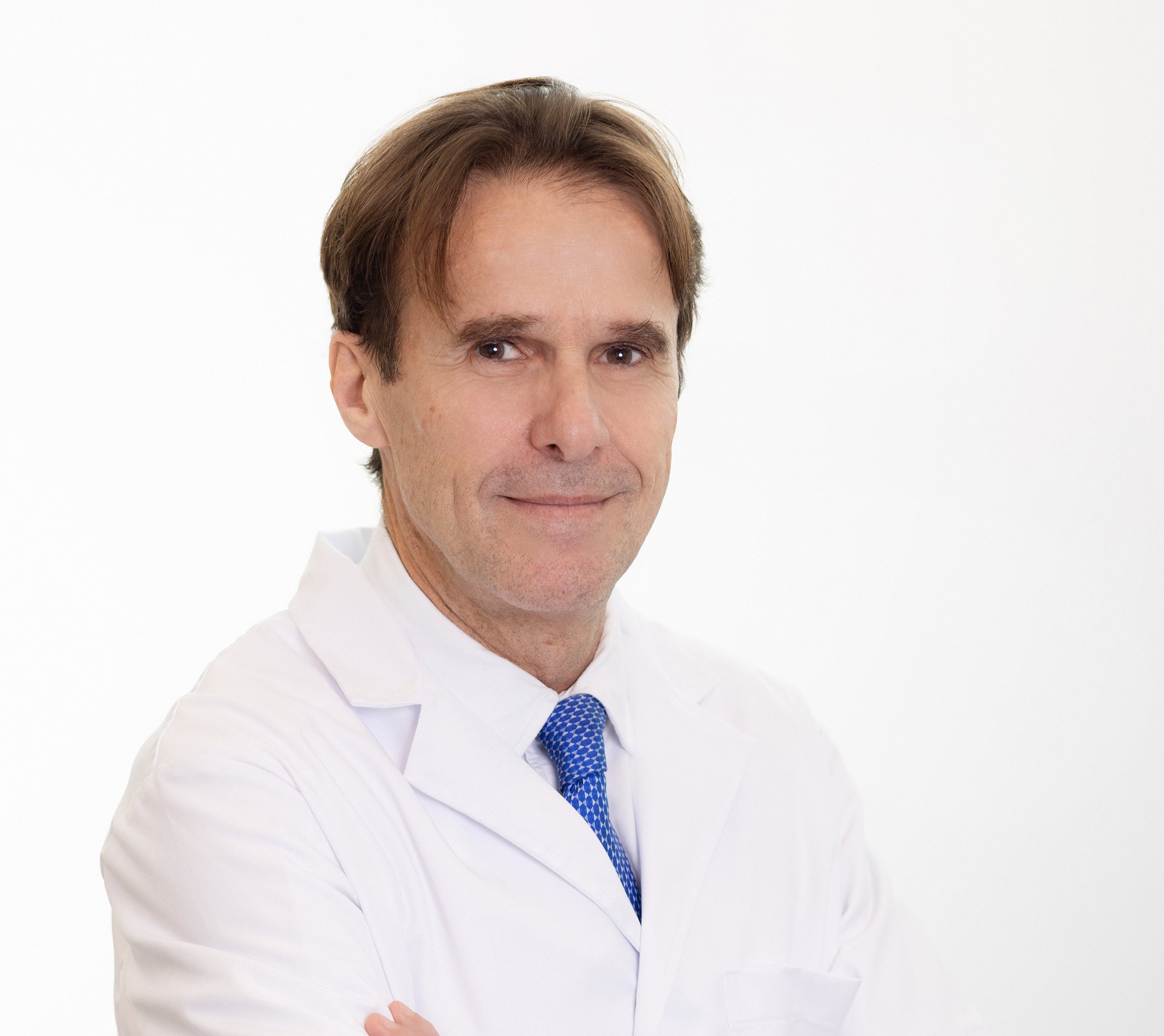
Dr. Joaquín Arribas Data
HMRIB
23.07.2026
Dr. Joaquín Arribas (HMRIB): “In recent years, we have shown that it is possible to bring developments originating in academia all the way to clinical trials.”
https://atmpcatalonia.com/wp-content/uploads/2026/07/Joaquin-Arribas-Hospital-del-Mar.jpg

The development of CAR-T therapies to treat solid tumours has reached a new milestone in Barcelona with the launch of the first clinical trial of a therapy targeting a pathological form of the HER2 protein. Developed entirely by scientific institutions in the city, the treatment will be administered to fifteen patients at Vall d’Hebron University Hospital and Hospital del Mar to assess its safety and obtain the first indications of efficacy. Its innovative strategy enables immune cells to act specifically against tumour cells, reducing the risk of damage to healthy tissue.


The project is led by Dr Joaquín Arribas, Director of the Hospital del Mar Research Institute and Group Leader at the Vall d’Hebron Institute of Oncology, two organisations that are members of the ATMP Catalonia network. Arribas identified the p95HER2 protein in 2008 and has led the development of this new therapy for more than a decade. He also heads the Mutation-Specific CAR T Endometrial Cancer project, recently selected for the ATMP Catalyst programme.


We spoke to him about the current state of advanced therapies in oncology, the challenges that still hinder their application in solid tumours, and the decisive role of academic research, infrastructure and sustained funding in enabling these innovations to reach patients.

Joaquin Arribas

Advanced therapies are becoming established as a new paradigm in oncology. How would you assess the current landscape, and what potential do you think they hold in the coming years?

In just a few years, advanced therapies have gone from being a promising prospect to becoming a clinical reality for certain patients. The results achieved with CAR-T therapies, gene therapies and other advanced therapy medicinal products have shown that it is possible to deliver clinical benefits that were difficult to achieve with conventional approaches.


Even so, I believe we are still at a relatively early stage. In the coming years, we will see more sophisticated therapies capable of overcoming resistance mechanisms, acting in more complex tumour environments and reaching a greater number of patients. The potential is enormous, particularly in situations where current treatments remain insufficient.

Despite advances in CAR-T and other ATMPs, bringing these therapies to solid tumours remains a major challenge. In your view, what are the main scientific and clinical barriers?

Solid tumours present challenges that are not encountered in many haematological malignancies. First, it is more difficult to identify targets that are present on tumour cells but absent from healthy tissues. Second, the tumour microenvironment creates multiple mechanisms that hinder the activity of therapeutic cells. Finally, the cells must physically reach the tumour, infiltrate it and remain active there for as long as necessary.


From a clinical perspective, ensuring safety is also essential. Many of the targets found in solid tumours are also present, albeit at low levels, in normal tissues. It is therefore necessary to develop strategies that increase the specificity of these therapies and maximise their therapeutic index.

What role can academic research play in developing new advanced therapies and translating them into clinical trials?

Academic research is essential because it often explores ideas and biological mechanisms that are still too early-stage or risky for industry. Many of the innovations that are now part of clinical practice originated in academic laboratories.


In addition, academic centres have a unique proximity to patients and clinicians, which helps identify unmet medical needs and turn them into new therapeutic strategies. In recent years, we have demonstrated that it is possible to take developments originating in academia all the way to clinical trials, particularly when the right infrastructure is in place and researchers, hospitals, regulators and companies work closely together.

Which funding mechanisms do you believe should be strengthened to advance this type of research and help bring it to patients?

One of the main challenges is that advanced therapies require long and complex development processes. Therefore, rather than occasional increases in funding, what we need are stable, predictable mechanisms that can be sustained over time. Developing a new therapy can take more than a decade, and it is difficult to build robust programmes around exceptional calls for proposals or temporary initiatives.


It would also be important to simplify the administrative procedures associated with research and clinical translation. Researchers are required to meet an increasing number of bureaucratic requirements, which often consume time and resources without delivering proportional value.


In conclusion, Catalonia has the talent, hospitals, infrastructure and experience needed to continue leading in this field. The challenge is to consolidate this ecosystem through stable policies that enable long-term planning.

“In recent years, we have demonstrated that it is possible to take developments originating in academia all the way to clinical trials.”
Dr. Joaquín Arribas